


Montessori vs. Traditional Preschool: What Makes a Montessori Preschool Different?
- Agape School House
- 3 days ago
- 3 min read
Choosing the right preschool can shape a child’s early learning experience and development. Parents often face the decision between enrolling their child in a Montessori preschool or a traditional preschool. Both approaches aim to prepare children for school and life, but they differ significantly in philosophy, classroom environment, and teaching methods. Understanding these differences helps parents make an informed choice that fits their child’s needs.
Core Philosophy and Approach to Learning
Montessori preschools follow the educational philosophy developed by Dr. Maria Montessori in the early 1900s. This approach centers on child-led learning, where children explore and discover at their own pace. The teacher acts as a guide rather than a traditional instructor, encouraging independence and self-motivation.
In contrast, traditional preschools often use a teacher-directed model. The teacher plans lessons and activities, guiding the entire class through a structured curriculum. Learning is more group-focused, with set times for activities, play, and instruction.
Key differences include:
Montessori
- Emphasizes hands-on learning with specially designed materials
- Supports self-paced exploration and decision-making
- Encourages independence and responsibility from an early age
Traditional
- Follows a fixed schedule with teacher-led activities
- Uses group instruction and play-based learning
- Focuses on socialization and basic academic skills
Classroom Environment and Materials
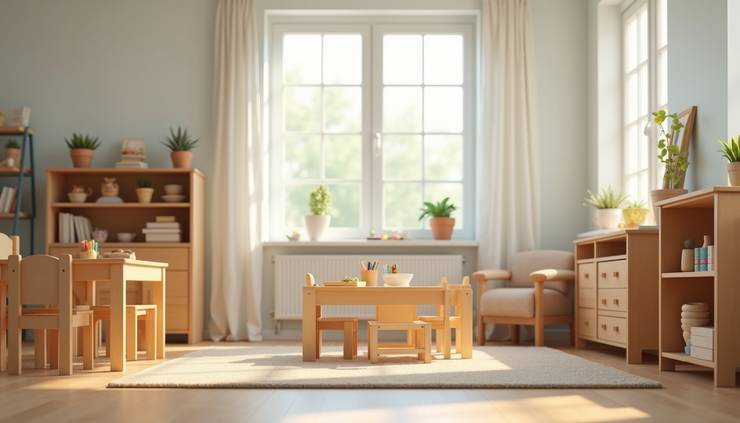
The physical setup of Montessori classrooms is distinct. They feature child-sized furniture and open shelves with accessible materials. Each item is designed to teach a specific skill or concept, such as pouring, counting, or language development. Children choose activities freely, which promotes concentration and engagement.
Traditional preschool classrooms tend to have more adult-sized furniture and a variety of toys and learning tools. Activities are often organized by the teacher and may include circle time, story reading, and group games.
The Montessori environment is carefully prepared to foster order and calm. Materials are arranged neatly to invite exploration without distraction. Children learn to care for their space, which builds respect for their environment.
Role of the Teacher
In Montessori preschools, teachers observe children closely to understand their interests and developmental stages. They introduce new materials when a child is ready and step back to let the child work independently. The teacher’s role is to support rather than direct learning.
Traditional preschool teachers lead the class through planned lessons and activities. They provide instructions, manage behavior, and facilitate group interactions. The teacher often directs play and learning to meet curriculum goals.
This difference affects how children develop skills like problem-solving and self-regulation. Montessori children practice making choices and managing their work, while traditional preschoolers learn to follow group rules and routines.

Social Development and Interaction
Both Montessori and traditional preschools support social development but in different ways. Montessori classrooms often have mixed-age groups, allowing younger children to learn from older peers and older children to develop leadership skills. This setup encourages cooperation and empathy.
Traditional preschools usually group children by age, focusing on peer interaction and group activities. Children learn to share, take turns, and work in teams through structured play and guided social experiences.
Parents may notice that Montessori children often show strong independence and confidence, while traditional preschoolers may excel in group participation and following social norms.
Academic Focus and Outcomes
Montessori preschools introduce academic concepts through concrete materials and real-life activities. For example, children learn math by handling beads or language through tactile letters. This approach builds a deep understanding of concepts rather than memorization.
Traditional preschools often emphasize readiness for kindergarten with activities that develop literacy, numeracy, and fine motor skills through worksheets, songs, and games.
Research shows that Montessori students tend to perform well academically and socially in later years, benefiting from early self-directed learning habits. Traditional preschool also provides a solid foundation, especially for children who thrive in structured environments.

Making the Right Choice for Your Child
Choosing between Montessori and traditional preschool depends on your child’s personality, learning style, and your family’s values. Consider these questions:
Does your child enjoy exploring independently or prefer guided activities?
Are you looking for a flexible, child-led approach or a structured routine?
How important is mixed-age interaction versus same-age peer groups?
What kind of learning environment feels most comfortable for your child?
Visiting preschools, observing classrooms, and talking to teachers can provide valuable insight. Remember that no one approach fits every child perfectly. The best preschool supports your child’s growth, curiosity, and love of learning.
Understanding the differences between Montessori and traditional preschools helps parents choose a path that nurtures their child’s unique potential. Whether your child thrives in a self-directed environment or a structured setting, early education lays the foundation for lifelong learning and confidence. Take time to explore options and find a preschool that feels right for your family’s journey.
Comments